Torsdag 19. februar 2026, kl. 18–19.30
Nitja senter for samtidskunst
[ENGLISH TEXT BELOW]
«En bok i en ransel, hengende i en skulderstropp, på vandring, alltid i nærheten, reivet som et spebarn, den personlige boken.» Guttorm Guttormsgaard
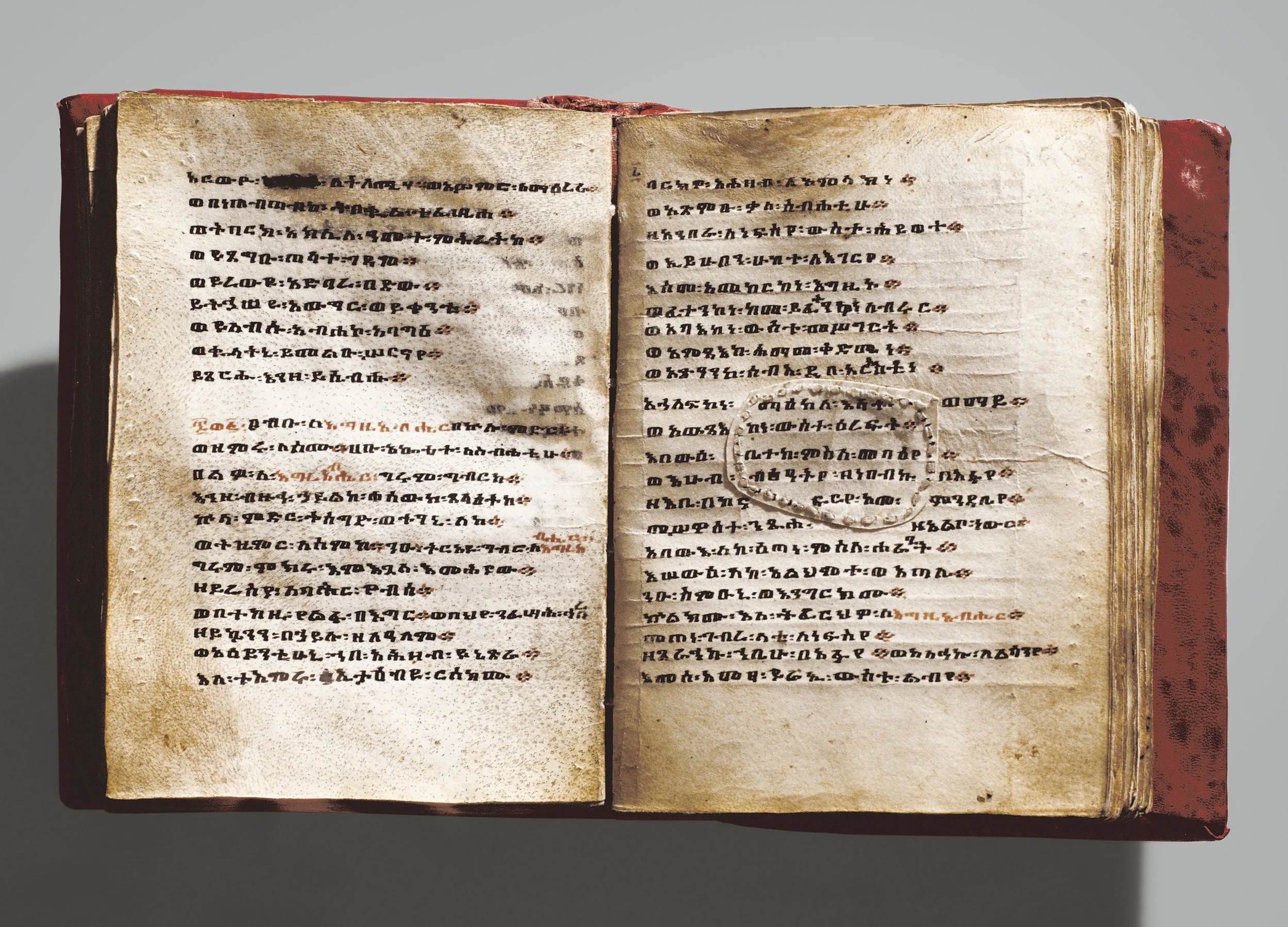
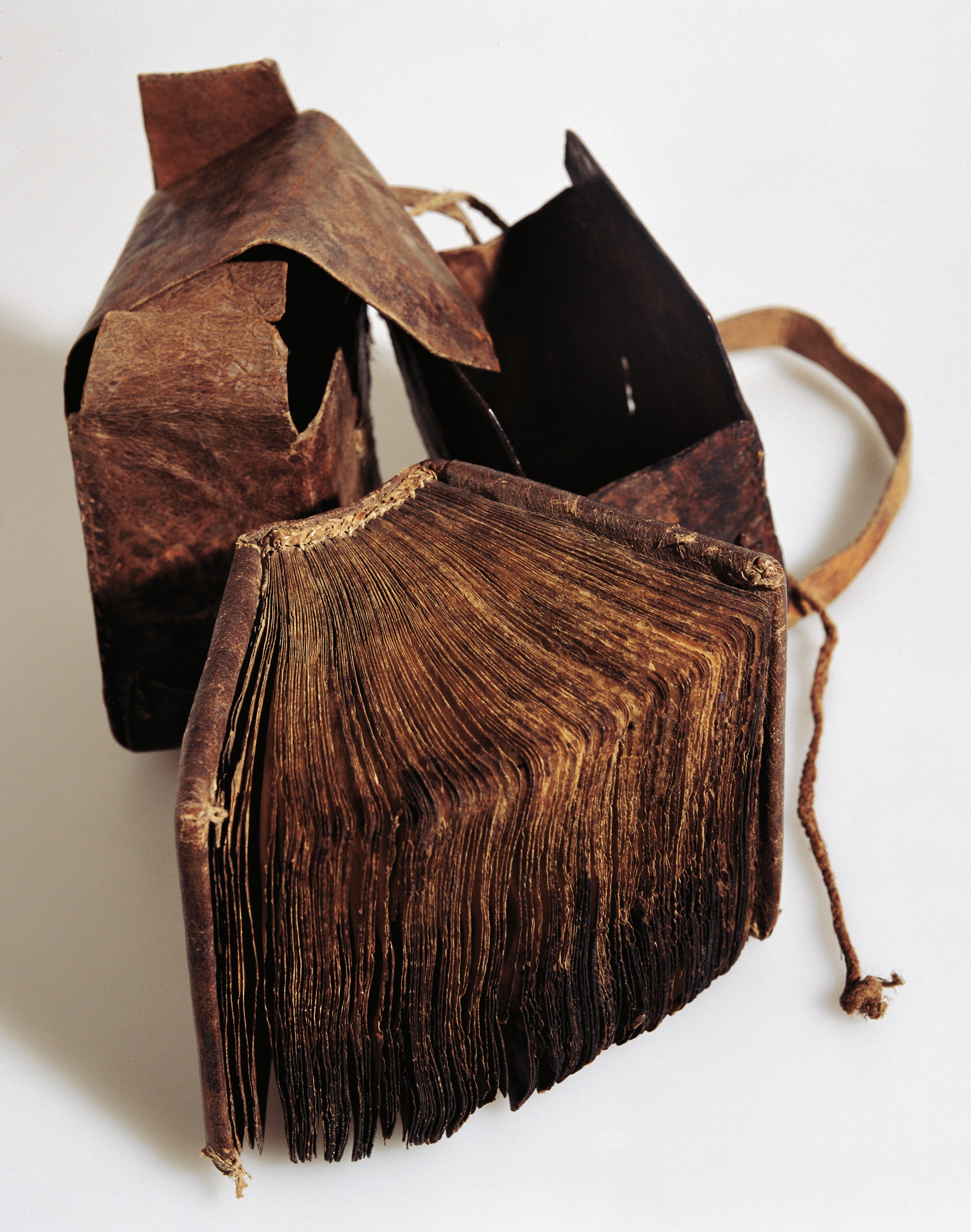
Det finnes to etiopiske pergamentbøker i Guttormsgaards arkiv. Begge er håndskrevne, på det semittiske oldtidsspråket geez. Omslaget til den ene boka er utformet som en veske eller ransel. I den andre er sidene lappet med nål og tråd, og boka er utstyrt med fantastiske illustrasjoner. Men hva gjør de egentlig i Guttormsgaards arkiv? Stemmer det at de er bibler, slik Guttormsgaard trodde? Og hvordan kan vi lese dem?
For å nærme oss slike spørsmål har vi invitert Eyob Derillo (ekspert på etiopiske håndskrifter og forhenværende kurator for de etiopiske samlingene ved British Library) og kunstneren Robel Temesgen (som nylig var aktuell med utstillinger ved Nitja og Guttormsgaards arkiv) til en uformell sammenkomst der vi i felleskap undersøker de to bøkene. Temesgen vil fortelle om sin egen bruk av pergament som kunstnerisk materiale, mens Derillo hjelper oss med å tyde tekstene og forstå dem i lys av Etiopias rike manuskriptkultur. Samtalen vil primært foregå på engelsk.
NB: Begivenheten finner sted på Nitja senter for samtidskunst på Lillestrøm (Kirkegata 10A). Gratis og åpent for alle!
Thursday, February 19, 2026, 6:00–7:30 pm
Nitja Center for Contemporary Art, Lillestrøm
“A book in a bag, hanging from a shoulder strap, on the move, always close at hand, swaddled like an infant—the personal book.”
Guttorm Guttormsgaard
There are two Ethiopian parchment books in the Guttormsgaard Archive. Both are handwritten, in the ancient Semitic language Geʽez. The cover of one of the books is designed like a bag. In the other, some pages have been mended with needle and thread, and the book is adorned with extraordinary illustrations. But what are the books doing in the Guttormsgaard Archive? Is it true that they are Bibles, as Guttormsgaard believed? And how can we read them?
To explore these questions, we have invited Eyob Derillo (an expert on Ethiopian manuscripts and former curator of the Ethiopian collections at the British Library) and the artist Robel Temesgen (who recently exhibited at Nitja and at the Guttormsgaard Archive) to an informal gathering where we will collectively examine the two books. Temesgen will speak about his own use of parchment as an artistic material, while Derillo will help us read the texts and understand them in the context of Ethiopia’s rich manuscript culture. The conversation will take place primarily in English.
Note: The event will be held at the Nitja Center for Contemporary Art in Lillestrøm (Kirkegata 10A). Free and open to all!
Med støtte fra / supported by:

